
When motivation stops working, most men assume the problem is discipline.
You tell yourself you need to try harder, become more consistent, or simply push through it. At first, that explanation feels logical. After all, recovery takes effort, and staying on track is supposed to require discipline. But for many men, that is not the full picture.
Sometimes the issue is burnout. Sometimes it is a lack of structure. Sometimes it is both happening at the same time.
That distinction matters because the solution changes depending on the problem. If burnout is treated like laziness, nothing improves. If lack of structure is mistaken for exhaustion, consistency becomes harder to maintain. This is why understanding discipline vs burnout matters during recovery.
When motivation fades, it does not automatically mean effort disappeared. More often, something underneath has changed.
Common reasons motivation starts feeling harder include:
- Mental fatigue building over time
- Recovery becoming fully self-managed
- Too much stress without enough structure
- Daily routines becoming inconsistent
- Accountability slowly disappearing
For many men, the issue is not wanting recovery less. It is trying to maintain consistency without enough support around them.
Why Motivation Stops Holding, Even When You’re Still Trying?

One of the biggest misconceptions in recovery is the belief that motivation should stay constant.
At first, it often feels strong. After treatment, many men feel focused, committed, and determined to keep moving forward. Progress feels clear, routines seem manageable, and consistency feels realistic. Then life starts becoming normal again.
Responsibilities return. Stress builds. Work demands increase. Recovery slowly becomes one more thing competing for energy and attention. This is often where lack of motivation men recovery searches begin making sense.
The issue is not always that motivation disappears completely. More often, motivation becomes harder to access when daily life feels overloaded.
A few things usually start happening:
- Routines become less consistent
- Recovery feels mentally heavier
- Small setbacks affect momentum more
- Healthy habits require more effort than before
- Stress starts influencing decisions more often
Many men interpret this shift as failure. In reality, motivation naturally becomes less reliable over time. That is normal.
What matters is whether systems exist when motivation changes. Recovery becomes difficult when consistency depends entirely on feeling motivated every day.
That is one reason why motivation fades recovery becomes such a common experience after treatment.
What Burnout in Recovery Actually Looks Like for Men?
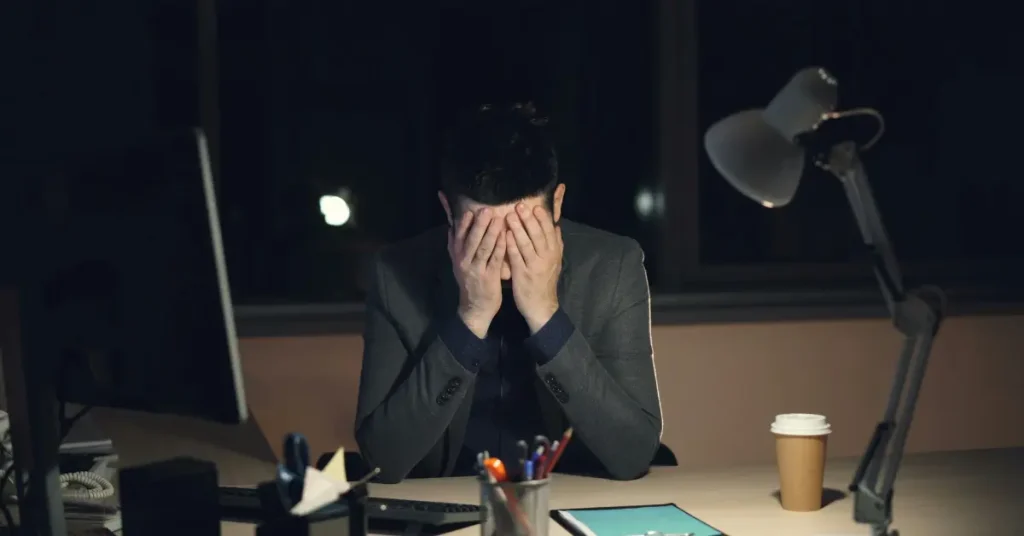
Burnout in recovery does not always look obvious. Many men imagine burnout as complete exhaustion or emotional collapse. In reality, it often looks quieter than that.
You may still be functioning. Still working. Still showing up for responsibilities. But internally, things start feeling harder than they used to.
Burnout in men recovery often looks like:
- Mental fatigue that does not fully go away
- Feeling disconnected from routines
- Losing momentum even when you care about progress
- Small responsibilities feeling heavier than usual
- Reduced patience or increased frustration
- Feeling mentally checked out without fully understanding why
Sometimes burnout simply feels like this: “I still care, but everything feels harder than it used to.”
That difference matters.
Burnout is not necessarily about effort disappearing. It is often about energy running low after carrying too much for too long. The challenge is that burnout often builds gradually.
At first, it feels temporary. You assume stress will settle down or motivation will return naturally. But when burnout keeps building without support, consistency usually becomes harder to maintain.
For some men, burnout starts showing up in small ways first.
Routines that once felt manageable become harder to maintain consistently. Meetings become easier to skip. Sleep becomes less consistent. Work may still get done, but mentally everything feels heavier than it used to.
In many cases, burnout does not look dramatic from the outside. It looks like slowly losing momentum while trying to maintain a normal life.
What a Lack of Discipline Usually Looks Like in Recovery?

Lack of discipline looks different from burnout. While burnout often feels like mental exhaustion, discipline issues tend to show up through avoidance and inconsistency.
That may include:
- Avoiding routines you know matter
- Repeatedly putting off responsibilities
- Making excuses for unhealthy habits
- Choosing short-term comfort over long-term progress
- Lack of follow-through without feeling mentally exhausted
Inconsistent behavior usually becomes easier to justify when no structure exists around it.
Small decisions start becoming patterns:
- Skipping routines “just for today”
- Delaying responsibilities
- Isolating more often
- Prioritizing comfort over consistency
Over time, these patterns slowly weaken recovery stability.
In these situations, the issue may be less about depleted energy and more about behaviour patterns. But this is where many men get confused.
Recovery becoming inconsistent does not automatically mean discipline disappeared.
The key question is: Are you avoiding effort, or are you mentally running low?
That answer changes the solution.
If energy is depleted, pushing harder often makes burnout worse. If structure is missing, motivation alone usually stops holding. That is often where consistency begins slipping, which is why it helps to understand why most men fall off without structure and what actually changes when recovery loses reinforcement.
Why Most Men Misread Burnout as a Discipline Problem?
Many men default to self-criticism when motivation drops.
The immediate assumption becomes:
“I’m getting lazy.”
“I’m not disciplined enough.”
“I should be handling this better.”
On the surface, both burnout and discipline problems can look similar.
Men may:
- Stop following routines consistently
- Pull away from accountability
- Lose momentum
- Avoid responsibilities
- Feel mentally disconnected from recovery
The behaviors may look similar externally, but the underlying reason is often different.
That overlap makes misdiagnosis common.
The difference usually comes down to why things are slipping.
If recovery feels harder because energy is depleted, burnout may be the issue. If consistency keeps breaking because nothing reinforces routines, structure may be missing. Many men experience both at the same time.
Stress builds while accountability fades. Recovery becomes self-managed while mental fatigue increases. This combination quietly makes staying consistent harder than expected.
What Burnout and Discipline Problems Often Have in Common?

Even though burnout and discipline problems are different, they often share the same underlying issue: lack of systems.
When recovery becomes fully self-managed, staying consistent usually becomes harder. Without enough structure, recovery starts depending heavily on willpower, and that becomes difficult to sustain over time.
Without structure:
- Accountability fades
- Healthy routines become easier to avoid
- Stress becomes harder to manage
- Recovery depends heavily on willpower
- Small inconsistencies turn into bigger setbacks
This is one reason many men struggle after treatment. Often, the problem is not effort disappearing. What changes is the environment. Routines lose reinforcement, accountability becomes inconsistent, and staying on track requires more mental effort than before.
This is also where peer accountability starts making a difference. When progress stays visible and expectations exist, slipping becomes harder to ignore. If you want to understand why support systems matter, it helps to explore how peer support keeps men consistent after rehab.
What Actually Helps When Motivation Stops Working?
When motivation becomes unreliable, the answer is rarely pushing harder. For many men, what actually helps is reducing reliance on motivation altogether.
That usually means building systems that continue working even when energy feels low.
Helpful changes often include:
- More consistent routines
- Clearer expectations day to day
- Better accountability
- Less decision fatigue
- More structure during stressful periods
The goal is simple: Make consistency easier to maintain.
The most effective environments reduce the amount of mental energy required to stay on track.
Instead of constantly deciding what to do next, routines become more automatic. Expectations become clearer. Accountability becomes built into daily life instead of relying entirely on self-discipline.
When a More Structured Environment Starts Making Sense?

Sometimes motivation struggles are temporary. Other times, they become a sign that more support may be necessary.
A structured environment may make more sense if:
- Motivation feels unreliable for long periods
- Routines repeatedly fall apart
- Burnout keeps affecting consistency
- Recovery feels harder to manage alone
- Stress regularly disrupts progress
This does not mean failure.
For many men, it simply means the current environment is no longer supporting consistency well enough.
If you are weighing options, it helps to understand structured living vs independent living for men and what actually changes day to day.
The Real Question Is Not Discipline, It’s What’s Missing
When motivation stops working, the instinct is usually to blame yourself.
But the better question is: What changed?
Is this burnout? Lack of structure? Too much independence too soon?
The answer matters because recovery becomes easier when the right support exists around it.
Build Recovery Around Systems, Not Motivation
If staying consistent has started feeling harder, the answer may not be more effort.
It may be more structure.
Confidential. No pressure. Just a conversation.